
Tag: teacher emails

  • A Calm Parent-Teacher Conference Checklist for Busy Families

    A Calm Parent-Teacher Conference Checklist for Busy Families

    Parent-teacher conferences are helpful, but they can also feel a little stressful. The meeting time is often short, teachers are busy, and parents may have several questions but not much time to organize them.

    In our family, one of the hardest parts has not always been the meeting itself. Sometimes the difficult part is simply finding a time that works. Between school schedules, teacher availability, parent work schedules, and family routines, it can take several emails just to confirm a meeting time. By the time the conference is finally scheduled, it is easy to feel rushed and unprepared.

    That is why I think parent-teacher conference preparation should start before the meeting is on the calendar. A little organization can make the conversation much easier.

    1. Start With the Main Reason for the Meeting

    Before opening school apps or checking grades, it helps to ask one simple question:

    What do I most want to understand from this meeting?

    The answer does not need to be complicated. It might be:

    • Is my child keeping up with assignments?
    • Is there a pattern in missing work?
    • Is my child participating in class?
    • What should we focus on at home?
    • Is there one skill that needs extra support?

    When I do not write this down first, I tend to collect too much information. Then the meeting becomes scattered. A clear main question helps me listen better and ask better follow-up questions.

    2. Check the School Gradebook Before the Meeting

    If your school uses a parent portal such as Skyward, PowerSchool, Infinite Campus, or another gradebook system, it is useful to check it before the conference.

    I do not recommend checking every small grade with panic. A single low score does not always tell the whole story. Instead, look for patterns.

    For example:

    • Are missing assignments showing up often?
    • Are quiz scores lower than homework scores?
    • Is one class much harder than the others?
    • Are grades improving or dropping over time?
    • Are there assignments marked missing that may have already been turned in?

    If your school uses Skyward, the Gradebook section can be helpful because it shows assignments, scores, and missing work in one place. Before a conference, I would write down only the items that need clarification. The goal is not to challenge every number. The goal is to understand what is happening.

    3. Review Google Classroom, Canvas, or Other Class Apps

    Many teachers now use Google Classroom, Canvas, Schoology, or other learning platforms. These tools can be very useful, but they can also make school information feel spread out.

    Before a conference, I like to check the class app for three things:

    1. Recent assignments
    2. Teacher comments or instructions
    3. Upcoming due dates

    This helps me avoid asking questions that already have simple answers online. It also helps me ask more specific questions.

    Instead of saying, “How is my child doing?” I can ask:

    “ I noticed the last writing assignment was difficult. What part of the assignment should we work on at home?”

    That type of question usually leads to a better conversation.

    4. Look Through Recent Teacher Emails

    Teacher emails are easy to miss, especially when school messages, app notifications, and personal emails are all mixed together.

    Before a parent-teacher conference, I try to search my email for the teacher’s name or class name. This helps me find earlier messages that may still matter.

    Useful things to look for include:

    • Missing assignment reminders
    • Behavior or participation notes
    • Test or project announcements
    • Schedule changes
    • Previous teacher suggestions

    This step is especially helpful when meeting times are hard to arrange. If there were several emails just to schedule the conference, important details can get buried in the conversation thread. Searching the teacher’s name helps bring everything back into one place.

    5. Write Down Questions Before the Meeting

    A short list of questions can make the meeting much more productive.

    I usually think of questions in three groups:

    Academic questions:

    • What skill should we focus on most right now?
    • Are missing assignments affecting the grade?
    • Is my child understanding the material in class?

    Organization questions:

    • Is my child turning in work on time?
    • Does my child need help tracking assignments?
    • Which app should we check most often?

    Support questions:

    • What can we do at home?
    • Is there a resource or routine you recommend?
    • Should we follow up again in a few weeks?

    It is better to bring five clear questions than a long list that cannot fit into the meeting time.

    6. Keep Notes During the Conference

    During the meeting, I try to write down only the most useful points. I do not need to record every sentence. I mainly want to capture action items.

    For example:

    • Check Google Classroom every Monday
    • Review missing assignments on Friday
    • Email teacher if a grade still looks incorrect
    • Help child start writing assignments earlier
    • Schedule a follow-up meeting if needed

    After the conference, these notes become the plan. Without notes, it is easy to leave the meeting feeling encouraged but then forget the details a few days later.

    7. Send a Short Follow-Up Email

    After the conference, a short email can help everyone stay on the same page.

    It does not need to be formal or long. Something like this is enough:

    “Thank you for meeting with me today. I appreciate your time. I will help my child check assignments more regularly and focus on the writing practice we discussed. Please let me know if there is anything else we should watch for.”

    This kind of message is useful because it confirms the plan and keeps communication open. It also gives the teacher a clear sense that the parent is trying to follow through.

    8. Make the Plan Simple Enough to Continue

    The biggest mistake is creating a plan that is too complicated. A conference can give parents a lot of information, but the follow-up routine should be simple.

    For our family, the most realistic plan is usually something small:

    • Check the gradebook once or twice a week
    • Look at Google Classroom or Canvas on a regular day
    • Save important teacher emails
    • Keep one short list of questions for follow-up

    A parent does not need a perfect system. A simple routine that continues is better than a complicated system that stops after one week.

    Final Thoughts

    Parent-teacher conferences work best when parents arrive with a clear picture, a few focused questions, and a simple follow-up plan.

    School apps, gradebooks, and emails can feel overwhelming when they are scattered across different places. But when parents use them before the meeting, they can make the conversation much more useful.

    The goal is not to control every detail. The goal is to understand what is happening, support the child better, and make the next step clear.
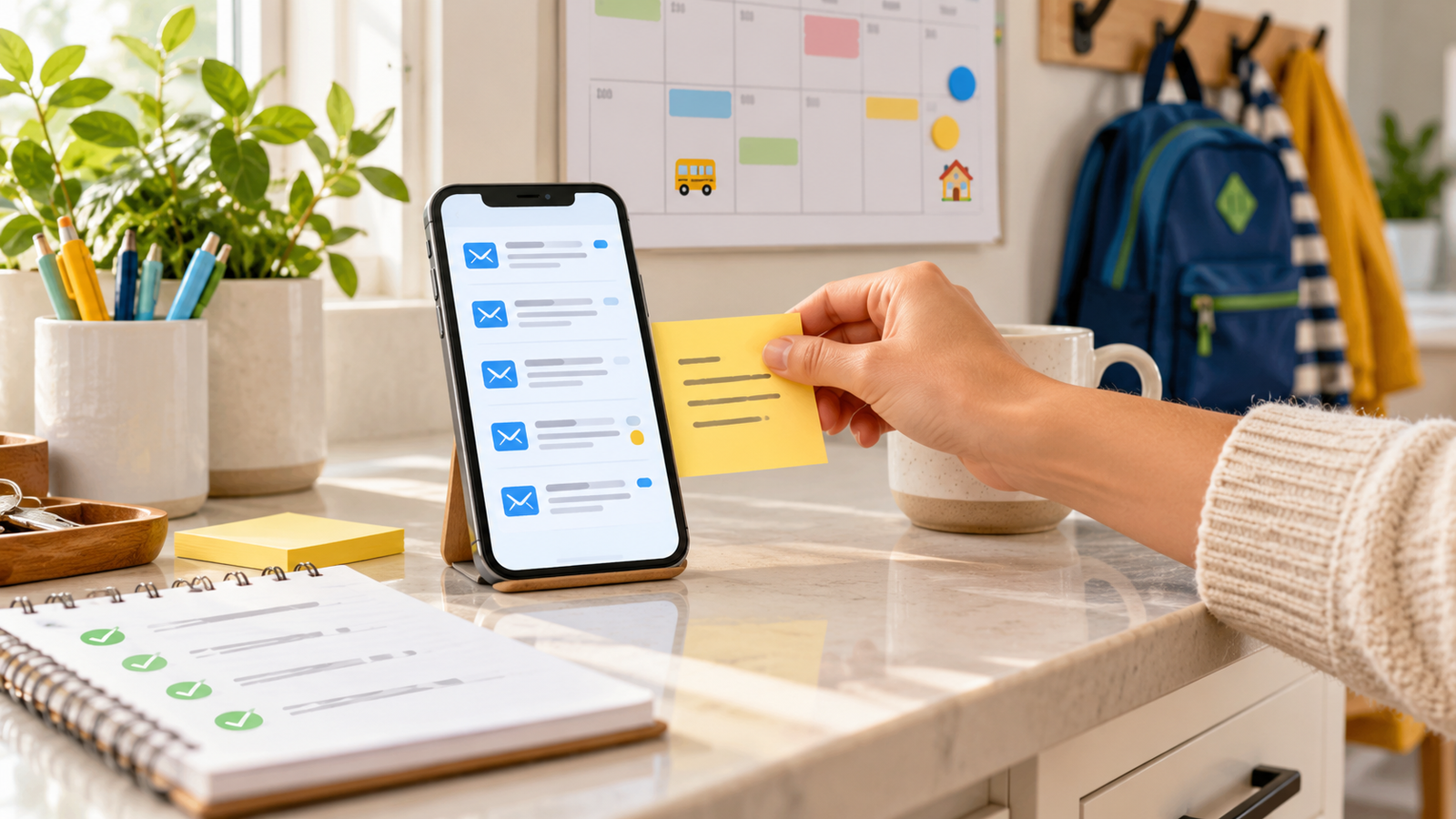
  • A Simple Inbox System for Important Teacher Emails

    A Simple Inbox System for Important Teacher Emails

    Teacher emails are often important, but they can be surprisingly easy to miss.

    One time, I realized that I had missed a school-related email longer than I should have. It was not because I did not care. It was because the message arrived in the middle of a busy day, surrounded by other emails, app alerts, and daily responsibilities. Later, I remembered seeing something from school, but I was not sure where it went.

    That experience made me think differently about teacher emails. A teacher message is not just another email. It may include information about assignments, classroom support, meetings, progress, behavior, missing work, or something the parent needs to respond to.

    The problem is that teacher emails often arrive in the same inbox as bills, receipts, advertisements, work messages, newsletters, and account notifications. Without a simple system, an important message can disappear quickly.

    Here is a practical way parents can keep teacher emails from getting lost.

    1. Create a Folder Just for School Communication

    The first step is to create one folder or label for school communication.

    You can name it something simple, such as:

    • School
    • Teacher Emails
    • School Communication
    • Kids School

    The exact name does not matter. What matters is that important school messages have one place to go.

    When a teacher email comes in, move it to that folder after reading it. If the email still needs a reply, you can keep it in the inbox until you respond, then move it later.

    This simple folder can save a lot of searching.

    2. Save Teacher Names as Contacts

    If teacher emails are hard to recognize, save teacher email addresses as contacts.

    This helps because the sender name becomes easier to notice in the inbox. Instead of seeing an unfamiliar email address, you may see the teacher’s name clearly.

    You can also add a short note in the contact, such as:

    • English teacher
    • Math teacher
    • Case manager
    • Counselor
    • Coach

    This is especially helpful when a student has several teachers and school staff members contacting the parent.

    3. Use Search Before Scrolling

    When looking for an old teacher email, scrolling is usually the slowest method.

    Search is much faster.

    Useful search terms may include:

    • teacher name
    • class name
    • “meeting”
    • “assignment”
    • “missing”
    • “conference”
    • “progress”
    • “schedule”
    • “IEP”
    • “support”

    If you remember the teacher’s name, start there. If you remember the topic but not the sender, search for the topic.

    This habit can make school communication much easier to manage.

    4. Flag Emails That Need a Reply

    Some teacher emails are only informational. Others need action.

    If an email needs a reply, use a star, flag, or mark-as-important feature. This helps separate emails you have read from emails you still need to handle.

    Examples of emails to flag include:

    • meeting requests
    • teacher questions
    • missing assignment concerns
    • progress updates that need a reply
    • forms or documents to review
    • schedule changes

    After you respond, remove the flag or move the email to your school folder.

    This keeps the inbox from becoming a confusing mix of finished and unfinished tasks.

    5. Check School Emails at a Regular Time

    Teacher emails can feel stressful if parents check them randomly all day.

    It may help to choose a regular time to check school emails. For example, you might check once in the morning and once in the evening. Another option is to check after work or after dinner.

    The goal is not to ignore messages. The goal is to make checking email a calm routine.

    During this check, ask:

    • Did any teacher email arrive?
    • Does anything need a reply?
    • Is there a date to add to the calendar?
    • Is there something to ask my child about?
    • Should this email be saved?

    A short routine can prevent important messages from getting buried.

    6. Add Important Dates to the Family Calendar

    Teacher emails often include dates that should not stay only in the inbox.

    If an email mentions a meeting, deadline, test, conference, performance, or appointment, add it to the family calendar right away.

    This helps because parents do not have to search for the email again just to remember the date.

    The email can stay in the school folder for details, but the calendar becomes the place to see what is coming.

    7. Reply Simply When You Are Late

    Sometimes parents miss an email. It happens.

    If you realize you are replying late, a simple and polite response is usually enough.

    For example:

    “I’m sorry for the delayed reply. Thank you for your message. I just saw this and appreciate the update.”

    You do not need to over-explain. Most teachers understand that families are busy.

    The important thing is to respond clearly once you notice the message.

    8. Keep Teacher Communication Respectful and Short

    When replying to a teacher, short and clear messages often work best.

    A good reply can include:

    • a greeting
    • thanks for the update
    • one clear question or response
    • any needed detail
    • a polite closing

    Long emails can sometimes make communication harder. If the topic is complicated, it may be better to ask for a phone call or meeting.

    For everyday school communication, simple is usually better.

    Final Thoughts

    Teacher emails are an important part of school communication, but they can get lost easily when parents receive messages from many different places.

    A simple system can help. Create a school email folder, save teacher names as contacts, use search instead of scrolling, flag emails that need a reply, and add important dates to the family calendar.

    Missing an email once does not mean a parent is careless. It often means the system needs to be simpler. With a few small habits, teacher emails can become easier to find, easier to answer, and less stressful to manage.